
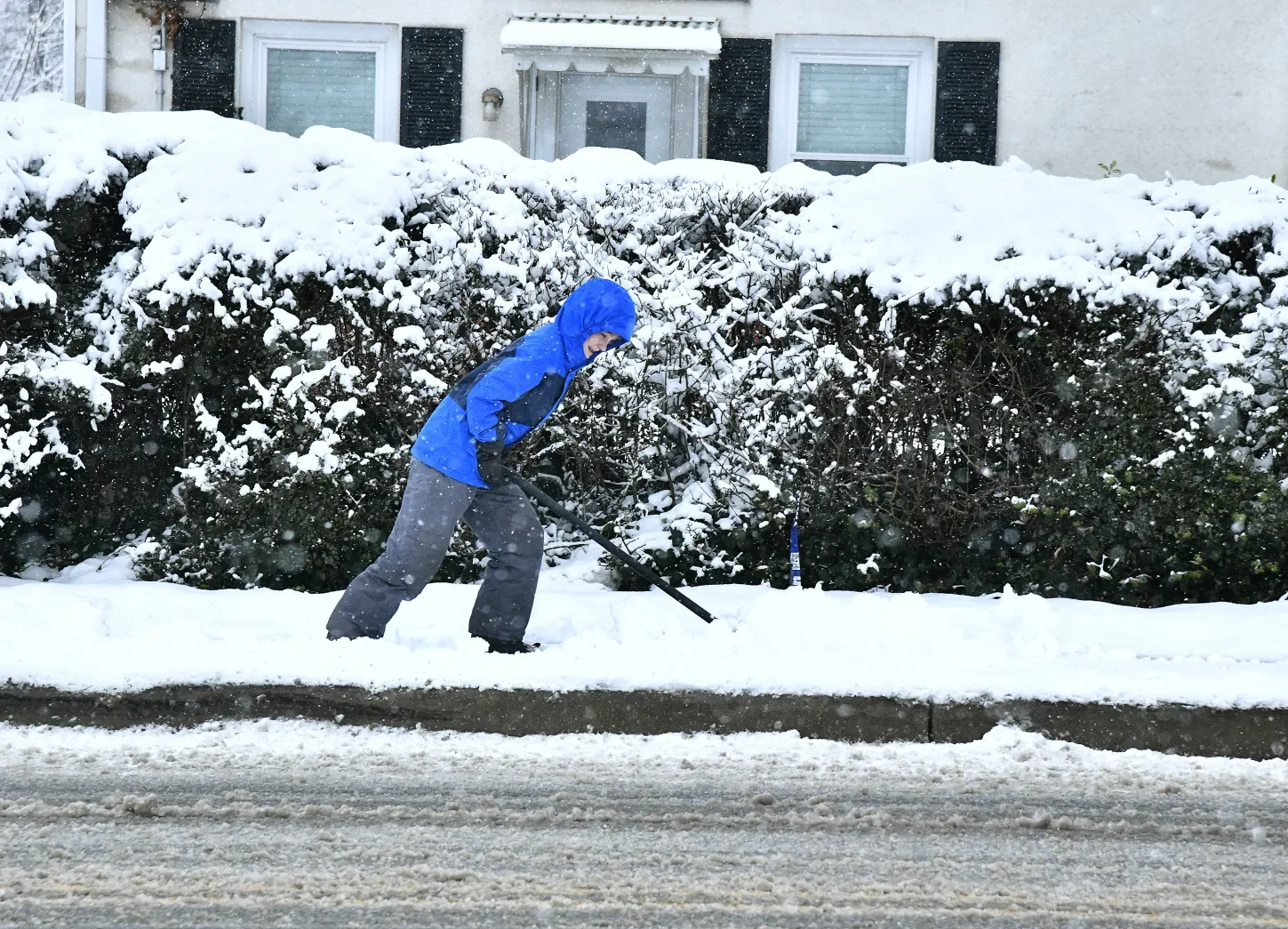
Annapolis residents and property owners would have more time to clear snow and ice from sidewalks under legislation introduced by the City Council.
The bill, sponsored by Alderman Harry Huntley, would replace the current three-hour deadline with deadlines based on how much snow, sleet and ice accumulates.
The legislation would go to second reading if the public safety, environmental and transportation committees review and recommend it.
The proposal follows a January ice storm that left streets icy for a week. The city did not issue citations for sidewalk snow removal.
Mayor Jared Littmann faced questions from residents in March about the city’s snow removal efforts and their effect on school drop-offs.
“It’s trying to be responsive to what we heard from constituents, what they’re looking for, and making sure that what we have in code reflects people’s reality,” Littmann told the Capital Gazette on Monday night.
The city code requires property owners or occupants to clear sidewalks within three hours after precipitation stops. Under Huntley’s proposal, they would have eight hours after a storm ends to clear accumulations of less than 4 inches and 24 hours for 4 inches or more.
If a storm ends between 5 p.m. and 5 a.m., the clock would start at 5 a.m. Sidewalks would have to be cleared down to the pavement.
The deadlines would account for the combined depth of snow, sleet and ice. An official weather source designated by the National Weather Service or a service the public works supervisor permits would determine when a storm begins and ends.
The bill would also replace a notice of infraction with a posted notice of violation.
City staff currently clear sidewalks when property owners fail to remove snow. Under the proposed legislation, residents would clear their sidewalks without city assistance and could face fines if they do not.
The public works director could reduce the fee charged to a residential property owner who is 65 or older, qualifies for low-income relief or has other circumstances warranting an adjustment. Owners must request an adjustment within 30 days after the bill is mailed.
“We don’t want to come out and have to either cite people or to shovel their walks and then charge them for that,” Littmann said. “But we are trying to be responsive to people concerned that schools reopen and other sidewalks aren’t clear. So, we are trying to find that balance between the right level of incentive and right balance between encouraging residents to shovel their own walk on a timely basis, while also providing for alternatives to get to the same result if we need to use those tools.”
The council also introduced a separate bill sponsored by Littmann to add a fourth phase to the city’s snow emergency plan. It would prohibit vehicles from city streets except snow equipment, emergency vehicles and vehicles authorized by the mayor.